Hard-side pop-up campers have solid walls, so they handle wind, rain, and cold better and need less upkeep than canvas models. Soft-side campers weigh less and cost less up front. If you camp in rough weather or store your rig for long stretches, hard-side is usually the better fit.
There is nothing quite like waking up in the middle of a national forest. The air is crisp, the coffee is brewing, and no crowded parking lots are in sight. If you are reading this, you are probably ready to upgrade from a ground tent to a real camper.
Pop-up campers are popular with people who want a real bed and a kitchen without towing a full-size RV. Folded down, they sit low on the road and pull more easily than a tall trailer.
But when you start shopping, you immediately face a tough choice. Should you buy a traditional soft-side canvas camper, or invest in a hard-side pop-up camper?
It is a big decision. If you choose the wrong style, you might freeze in the mountains or deal with constant maintenance headaches.
We want to help you make the right choice before you spend the money. We’ll look closely at the three biggest worries buyers have about soft-side campers. Then, we will look at how hard-side construction changes the game. We will also cover the honest trade-offs of both styles so you know exactly what you are paying for.
The 3 Big Worries with Soft-Side Campers
Soft-side pop-up campers use heavy-duty canvas or vinyl for their folding walls. While they’re common, experienced campers know they have three common weak points.
1. Canvas Wear and Tear
Canvas takes a beating from Mother Nature. When you camp in the sun, ultraviolet rays slowly bake the fabric. Over time, the canvas becomes brittle and fades. The biggest problem happens when it rains. If you have to pack up your camper while the canvas is still wet, you must open it back up immediately when you get home. If you leave wet canvas folded up for even a few days, mildew can grow and stain or damage the fabric. The EPA advises drying wet items completely.
2. Water Intrusion at the Seams
Water always finds a way inside. Canvas walls are stitched together using heavy threads. Over years of folding, unfolding, and baking in the sun, those threads can stretch and wear. Once the seams become weak, a heavy rainstorm can push water right through the stitching. Waking up with a puddle of water on your mattress is a quick way to ruin a camping trip.
3. Cold Penetration and Wind Noise
If you want to camp in late fall or early spring, a soft-side camper will be chilly. Thin canvas provides little insulation in a pop-up camper. The inside temperature closely follows the outside temperature. Your camper heater will have to work hard to keep up. Also, if a strong wind blows through the valley, the canvas walls can flap and snap for hours, which makes it hard to sleep.
Why Choose a Hard-Sided Pop-Up Camper?
A hard-side pop-up camper solves almost all of these problems. Instead of fabric, the walls are made from solid composite materials, aluminum, or fiberglass. The roof lifts, and the solid walls fold or slide into place.
First, solid walls do not rot. You do not have to worry about packing the camper away while it is raining. You can lower the camper in the rain without a wet canvas wall packed inside. Still, wipe down the interior and seals before long storage.
Second, the weather sealing is entirely different. Solid walls use rubber gaskets and seals instead of stitched thread. When it rains, water runs off the hard walls.
Finally, a hard-sided pop-up trailer gives you better climate control. Solid walls often include foam insulation. That helps slow summer heat and hold your heater’s warmth in winter. Plus, solid walls cut wind noise, so you can sleep through a breezy night.
Still weighing a rooftop tent? Our comparison of hard-sided pop-ups and rooftop tents covers that choice.
Hard-Side vs. Soft-Side: Side-by-Side Comparison
To make things easy, here is a direct look at how these two styles compare in the real world.
| Feature | Soft-Side (Canvas) Pop-Up | Hard-Side Pop-Up Camper (The El Cap) |
| Durability | Moderate. Canvas requires frequent cleaning and care. | High. Solid walls resist sun fade, rot, and tearing. |
| Weather Protection | Low insulation. Flaps in heavy winds. | Better insulation. Blocks wind and sheds rain. |
| Weight | Very lightweight. Easy to tow with small vehicles. | Heavier. Requires a capable SUV or pickup truck. |
| Maintenance | High. Must be completely dried before long-term storage. | Lower. Solid walls do not rot, but dry the interior and seals before storage. |
| Initial Cost | Very affordable for entry-level buyers. | Higher cost because of heavier materials and more complex engineering. |
| Security | Lower. Canvas is easier to cut than a solid wall. | Higher. Solid walls and locking doors are harder to get through. |
The Honest Trade-Offs: Weight and Cost
We cannot pretend that hard-side campers win every single category. Consider two real trade-offs before buying one.
The first trade-off is weight. Solid walls, glass windows, and heavy-duty hinges weigh significantly more than a sheet of canvas. A hard-side camper can cost you more in fuel economy than a soft-side camper. Make sure your truck or SUV has enough towing capacity to handle the extra weight.
The second trade-off is the price. Building folding solid walls requires complex engineering. So a hard-side rig usually costs more upfront than a basic canvas model. However, you are paying for longevity. A hard-side shell has no canvas to wear out, which can mean fewer big repair bills over the years.
Not sure what your truck or SUV can tow? Request a quote and the Tribe team will get back to you.
Pop-Up Truck Campers vs. Towable Trailers
You might also be looking at rigs that slide right into your pickup truck bed. A pop-up truck camper is a very popular choice for solo travelers. You carry it in the truck bed, so you don’t need a trailer.
You can find both canvas and solid-wall versions, including hard-sided truck campers. They are great for navigating extremely tight forest trails. But they have one big downside. When you arrive at your campsite, your truck is stuck underneath your house. If you want to drive to a hiking trailhead or run to town for ice, you have to pack up your entire camp just to move your vehicle.
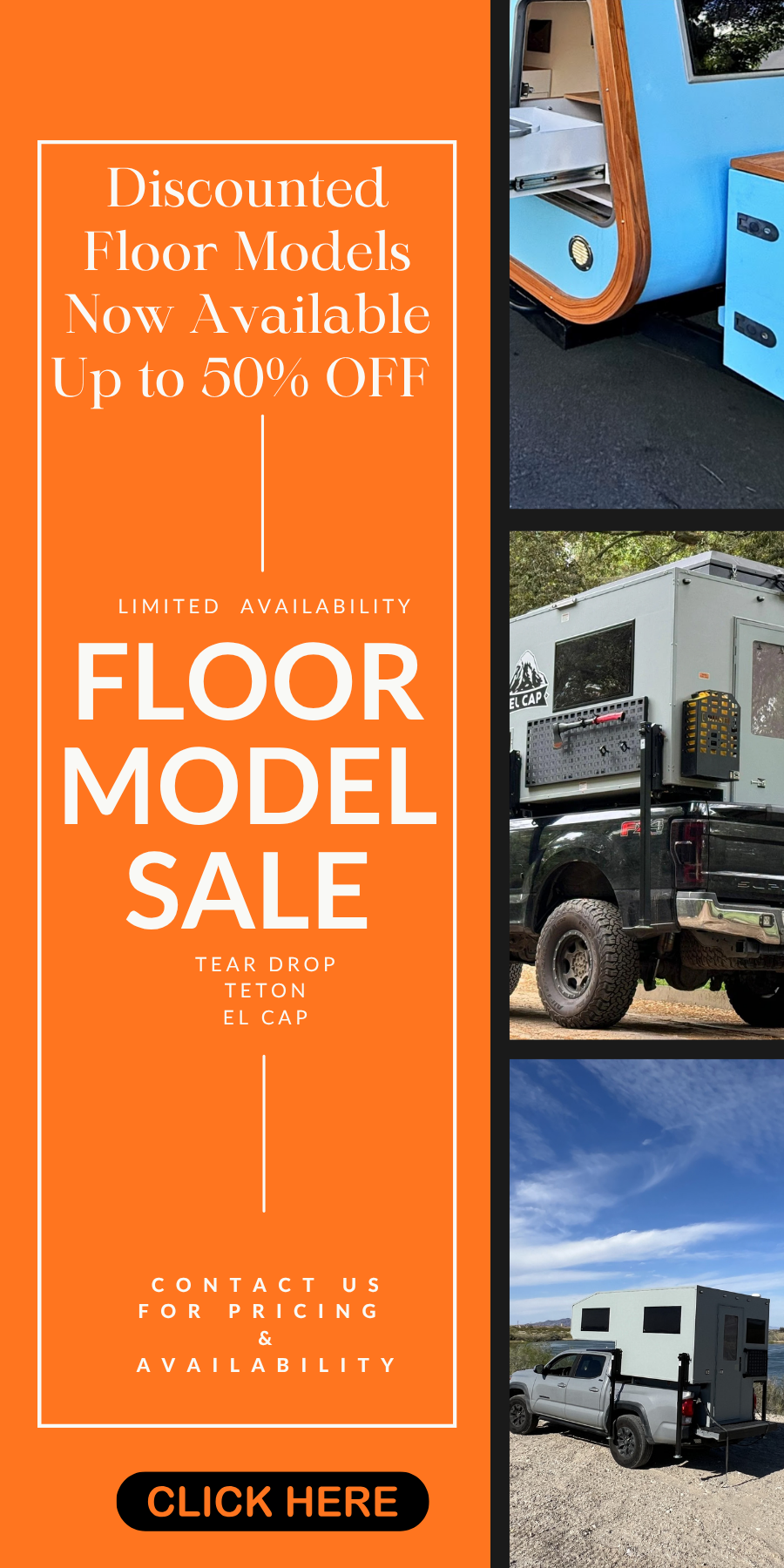
Tribe’s El Cap is a truck bed camper that mounts and unmounts with four lift jacks, so you can set it down at camp and use your truck.
This is why a towable trailer is often the better choice for couples and families. You can drop the trailer, set up camp, and then use your truck freely to explore the area.
Why Garageability Matters for a Pop-Up Camper
There is one more feature you need to think about. Where will you store your camper when you are not using it?
Covered RV storage costs money every month, and prices vary by area. Leaving your camper outside in the freezing snow or baking sun wears it down faster. Parking it in your own garage is one of the best ways to protect your investment.
This is where Tribe Trailers comes in. Tribe Trailers is a family-owned and operated business with its manufacturing facility in Peoria, Arizona. Tribe works directly with manufacturing plants worldwide, then handles quality control and shipping at its Peoria facility.
The company’s president, Brett Maister, is an avid off-road racer. When Brett sold his previous company, Tuff Stuff, he wanted to ensure his new trailer division stayed in the hands of people who cared about quality. According to Tribe, that racing experience shapes the trailer design. Many parts come from overseas manufacturers, and Tribe says that lets it run quality checks and improve the design before mass production. Warranties are handled in-house.
Find a Tribe dealer with the store locator. If you are ready to move now, check the current floor models, which are sold as-is.
Which Pop-Up Camper Should You Buy?
Choosing the right camper depends on how you want to travel. If you only camp two weekends a year in perfect sunny weather, a budget canvas pop-up might be fine.
But if you want to explore the backcountry in rain, wind, and cold, you need solid walls. A hard-sided camper offers more security, better insulation, and less canvas to maintain. It usually costs more up front, but for rough-weather camping, the extra comfort and durability can be worth it.
Take your time, check your vehicle’s towing capacity, and choose the rig that fits how you camp.
Ready to talk specifics? Call Tribe at 1-866-447-7895 or request a quote.
Frequently Asked Questions
1. How long does a hard-sided pop-up camper last?
Lifespan depends on how the camper is built, how often you use it, and how well you maintain it. Solid walls avoid canvas fade and wear, but tires, wheel bearings, roof seals, and water seals still need regular checks. Ask the maker about warranty terms before you buy.
2. Does a hard-sided pop-up trailer get too hot in the summer?
Usually not. Solid walls with foam insulation slow heat transfer better than canvas. If you open the hard-sided windows to create a cross breeze or turn on your air conditioning unit, the cabin stays more comfortable.
3. How does pop-up camper insulation work in a hard-side model?
Manufacturers build solid folding walls using composite panels or aluminum skins that often include foam insulation. The foam slows heat loss. That can extend your camping season into late fall, though extreme cold still takes preparation. For a full checklist, see our guide to cold weather camping in an off-road pop-up camper.
4. Are pop-up truck campers better than towable trailers?
It depends on your travel style. A pop-up truck camper is great for solo travelers who want to avoid pulling a trailer on very narrow Jeep trails. However, a towable trailer is often better for families because it usually offers more living space and water capacity, and you can unhitch your truck to run errands without taking your house with you.
5. Can I leave a hard wall camper popped up in my driveway all year?
Many owners do, but check your owner’s manual first. Solid walls handle rain and sun better than canvas, and roof seals and paint last longer when you lower the camper and store it in a garage or under a breathable cover.
6. Are hard-sided pop-up campers heavier to tow than canvas models?
Yes, they are generally heavier. Solid composite walls, glass windows, and heavy-duty lifting mechanisms add extra weight compared to simple canvas sheets. Always check your vehicle’s maximum towing capacity and tongue weight rating before buying any hard-sided rig to ensure you can tow it safely.