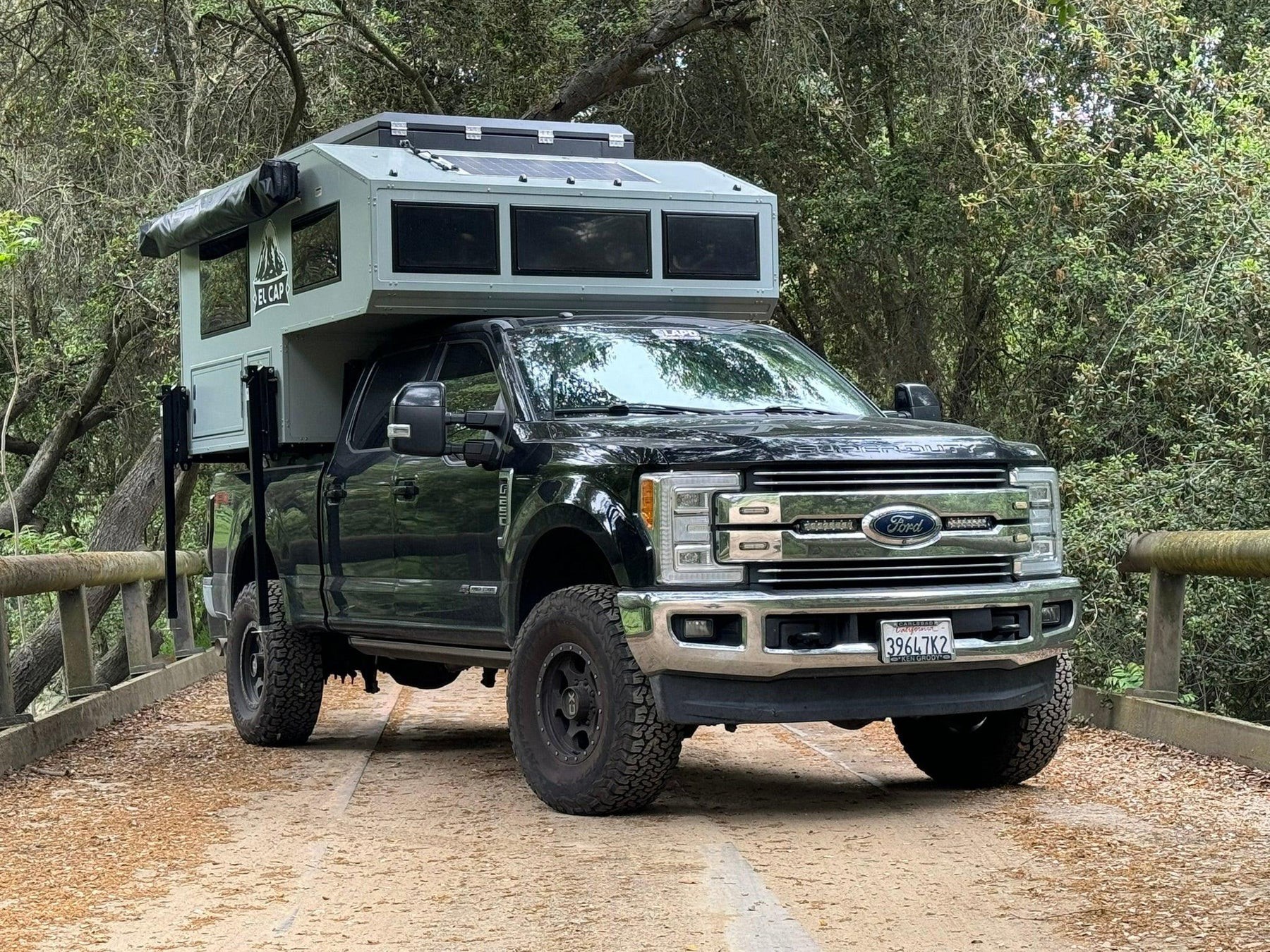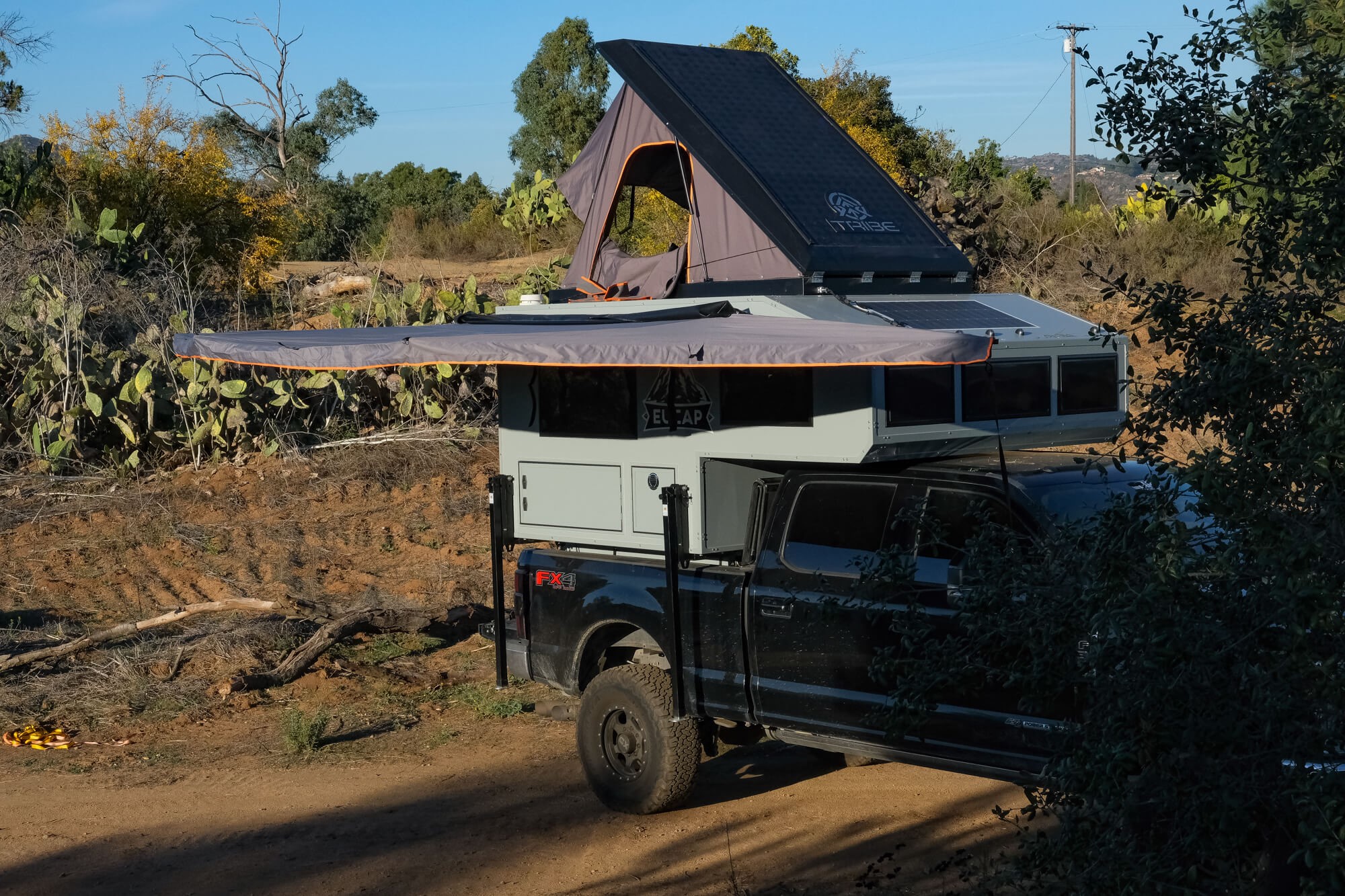
Overland camping is self-reliant, vehicle-based travel: you carry your own shelter, water, and power into remote country and camp where there are no hookups, reservations, or crowds. Planning a multi-week overland camping trip across the US comes down to six decisions: your route, your rig, your permits, your resupply plan, your safety gear, and your budget.
But then planning reality sets in. The dream quickly turns into a massive headache. Where do you even start? How do you carry enough water? What happens if your truck breaks down in the middle of nowhere?
Those are the right questions to be asking. At Tribe Trailers, we build off-road campers and overland trailers, and we spend a lot of time with owners who take them out for weeks at a stretch. This guide focuses on what actually goes wrong on long trips and how to plan for it.
Dispersed camping on public land is what makes this kind of travel possible, and the US has more of it than almost anywhere on earth. Most Bureau of Land Management and National Forest land is open for free camping, far from crowded RV parks.
Take it step by step, and you can build a plan you trust. Here is everything you need to sort out: routes, , permits, and safety.
Step 1: Choose Your Overland Camping Route
You cannot pack your bags until you know where you are going. The United States offers some of the most diverse terrain on the planet. Here are four overlanding trails and route networks worth building a multi-week trip around.
The Trans America Trail (TAT)
This is the ultimate cross-country adventure. It is a massive network of dirt roads and forest trails that stretches from the Atlantic Ocean to the Pacific coast. You do not have to drive the whole thing. You can easily pick a two-week section through the Midwest or the western states.
Utah Canyon Country
If you want to see red rocks and deep canyons, southern Utah is perfect. You can plan a route that connects places like Moab, the Grand Staircase, and Zion. This area is famous for amazing off-grid travel spots. Just remember that the desert gets extremely hot in the summer, so spring or fall is the best time to visit.
The Colorado Rockies
If you want high altitudes and cool mountain air, head to Colorado. The Alpine Loop is a famous route that takes you through historic mining towns and over mountain passes. You will need a vehicle with good ground clearance because these rocky trails can get rough.
Pacific Coast Backcountry
You can explore Oregon and Washington’s rugged logging roads and hidden forests. This route offers incredible views of the Pacific Ocean and massive pine forests. It is famous for wet weather, so you need a dry place to sleep. Oregon in particular has a deep bench of dispersed camping sites within a day of the coast.
Step 2: Choose the Right Rig and Expedition Trailer
The question we get asked most often is, “What trailer do I need for 2 weeks off-grid?”
If you are going out for a weekend, you can sleep in a ground tent. But if you are traveling for several weeks, you need a comfortable basecamp. Doing chores like cooking and setting up a wet tent every single day gets exhausting.
This is why an overland trailer earns its keep. A standard highway camper isn’t built for washboard, ruts, and dust, and it will show it after a few hundred miles of dirt road. The five things that matter most are frame, suspension, tires, water capacity, and power. You need a purpose-built overland travel trailer with a heavy-duty steel frame, thick all-terrain tires, and an independent suspension.
Your ideal expedition trailer setup should have a built-in water tank, a pull-out kitchen, and a solid power system powered by solar panels. With everything organized in a trailer, you can set up camp in about five minutes, leaving more time to relax and enjoy the view. For reference, that is how we spec the Tribe Trailers Expedition 500: a galvanized steel off-road chassis, independent air-ride suspension, 42 gallons of fresh water, 400W of solar, and a wet bath with a shower. Those details decide whether week three feels comfortable or miserable.
Step 3: Trailer Requirements by Terrain Type
Not all trails are the same. Match your trailer to the environment you plan to explore. Here is a simple guide to help you figure out what you need.
| Terrain Type | Biggest Challenge | Required Trailer Features | Ideal Trailer Style |
| Desert & Sand | Deep sand, extreme heat, limited water | Large water tanks, solar panels, lightweight body | Lightweight teardrop or pop-up |
| Forest & Mud | Tight trees, slippery mud, heavy rain | Good weather seals, mud-terrain tires, strong awning | Compact square-drop |
| Mountain Rocks | Steep climbs, big boulders, deep ruts | High ground clearance, articulating hitch, skid plates | Heavy-duty expedition trailer |
| Cross-Country | Long miles on mixed dirt and highway | Comfortable bed, indoor bathroom, aerodynamic roof | Fully loaded family overland rig |
Step 4: Permits, Passes, and Land Access
You cannot just drive anywhere you want in the United States. You have to know who owns the land.
Most overlanders who pack for off-grid travel rely on the Bureau of Land Management (BLM) and National Forest land. In most areas you can camp on this land for free for up to 14 days in any 28-day period, after which you have to move on, usually at least 25 miles.
If your route includes overlanding national parks, plan ahead. National parks require entrance fees. Buying an “America the Beautiful” annual pass is the smartest thing you can do. It costs $80 and covers entrance and day-use fees at National Park Service, Forest Service, BLM, and other federal recreation sites for a full year.
Download offline maps on your phone before you leave. Apps like Gaia GPS or OnX Offroad show exact property lines so you don’t accidentally camp on private property.
Step 5: Fuel, Water, and Resupply Strategy
When you are out for multiple weeks, you cannot carry all your food and water from day one. You have to plan “resupply days.”
A good rule of thumb is to plan a town stop every four to five days. Plan on one to two gallons of water per person per day. When you hit a town, fill up your water tanks, buy fresh groceries, and top off your gas tank.
Always carry extra fuel in approved containers mounted to your vehicle. Some stretches of the desert can go for hundreds of miles without a gas station.
Step 6: Emergency Safety and Communication
Safety is your top priority when you are miles away from a hospital. Cell phones rarely work in the deep backcountry.
You must carry a satellite communication device like a Garmin inReach. This little tool lets you send text messages to your family via satellite. If an emergency happens, you can press the SOS button to call search and rescue.
You also need a massive first aid kit. Pack extra bandages, splints, and basic medications. Finally, make sure you have a full-size spare tire for both your truck and your trailer, along with an air compressor to inflate them.
How Much Does Overlanding Across America Cost?
People always ask how much a long trip costs. The beauty of off-grid camping is that you save a lot of money by avoiding hotels and paid RV parks. Your main expenses will be gas and food.
Here is a realistic weekly budget breakdown for two people on a multi-week trip.
| Expense Category | Estimated Weekly Cost | Notes |
| Fuel (Gas/Diesel) | $200 to $350 | Depends heavily on your truck’s fuel economy and miles driven. |
| Groceries & Food | $150 to $250 | Buying groceries is cheap. Eating at small town diners costs more. |
| Camp Fees & Permits | $20 to $50 | Mostly free BLM camping, plus a few small park entrance fees. |
| Maintenance Fund | $50 to $100 | Always save a little each week for unexpected tire repairs or oil changes. |
| Total Weekly Budget | $420 to $750 | Very affordable compared to a traditional hotel vacation! |
Start Planning Your Overland Adventure Today
Planning a huge overland trip takes time. Do not try to plan the whole thing in one night. Start by choosing your route, setting your daily budget, and finding the perfect trailer to keep you comfortable.
To help you get started, create a simple checklist. Write down your route stops, your required safety gear, and your meal plans. Have a mechanic inspect your truck, pack your bags, and go. We have a limited number of discounted floor models available right now, including El Cap and Teton units. If you’re still looking for the right trailer for your trip, check out our floor discount models for current pricing and availability. You can also request a quote or call 1-866-447-7895, and we will tell you exactly what is left. The open road is waiting!
Frequently Asked Questions
1. What is the difference between off-grid travel and regular RV camping?
Regular RV camping usually happens in paved parking lots with electrical plugins and city water hookups. Off-grid travel involves driving deep into nature on unpaved roads with no facilities. You must bring your own power, your own water, and a way to pack out all your trash safely.
2. What trailer do I need for 2 weeks off-grid?
You need an expedition-style trailer built specifically for rough terrain. It must have a heavy-duty steel frame, an independent suspension to handle bumps, and thick all-terrain tires. It should also have large freshwater tanks, a solar power setup to keep your batteries charged, and a comfortable sleeping area so you do not get exhausted.
3. Do I need a heavily modified truck to pull an overland camper?
Not necessarily. Many modern overland campers use lightweight aluminum bodies. A standard mid-size pickup truck like a Toyota Tacoma or an SUV like a Jeep Grand Cherokee can easily tow them. Always check your vehicle’s towing capacity and make sure it is rated higher than the fully loaded weight of your camper.
4. How do I find safe places to sleep while overlanding?
The best way to find safe, legal campsites is by using digital mapping apps like OnX Offroad, iOverlander, or Gaia GPS. These apps show you exact property lines so you know when you are safely on public BLM or National Forest land. They also feature reviews from other campers so you know what the road conditions look like.
5. How much water should I carry for a multi-week trip?
Plan for 1 to 2 gallons of water per person, per day. This covers drinking water, cooking, washing dishes, and basic hygiene. For a multi-week trip, you don’t need to carry a month’s worth of water at once. A 20- to 30-gallon tank is perfect as long as you plan to refill it at gas stations or RV dump stations every few days.
6. Is it safe to overland across the country by myself?
Solo overlanding is very popular and generally safe as long as you are prepared. The biggest risk is a mechanical breakdown in a remote area. If you travel alone, you must carry a satellite messenger device, extra food and water, and basic vehicle recovery gear like a winch and traction boards. Always tell a friend or family member your exact route before you leave cell service.